


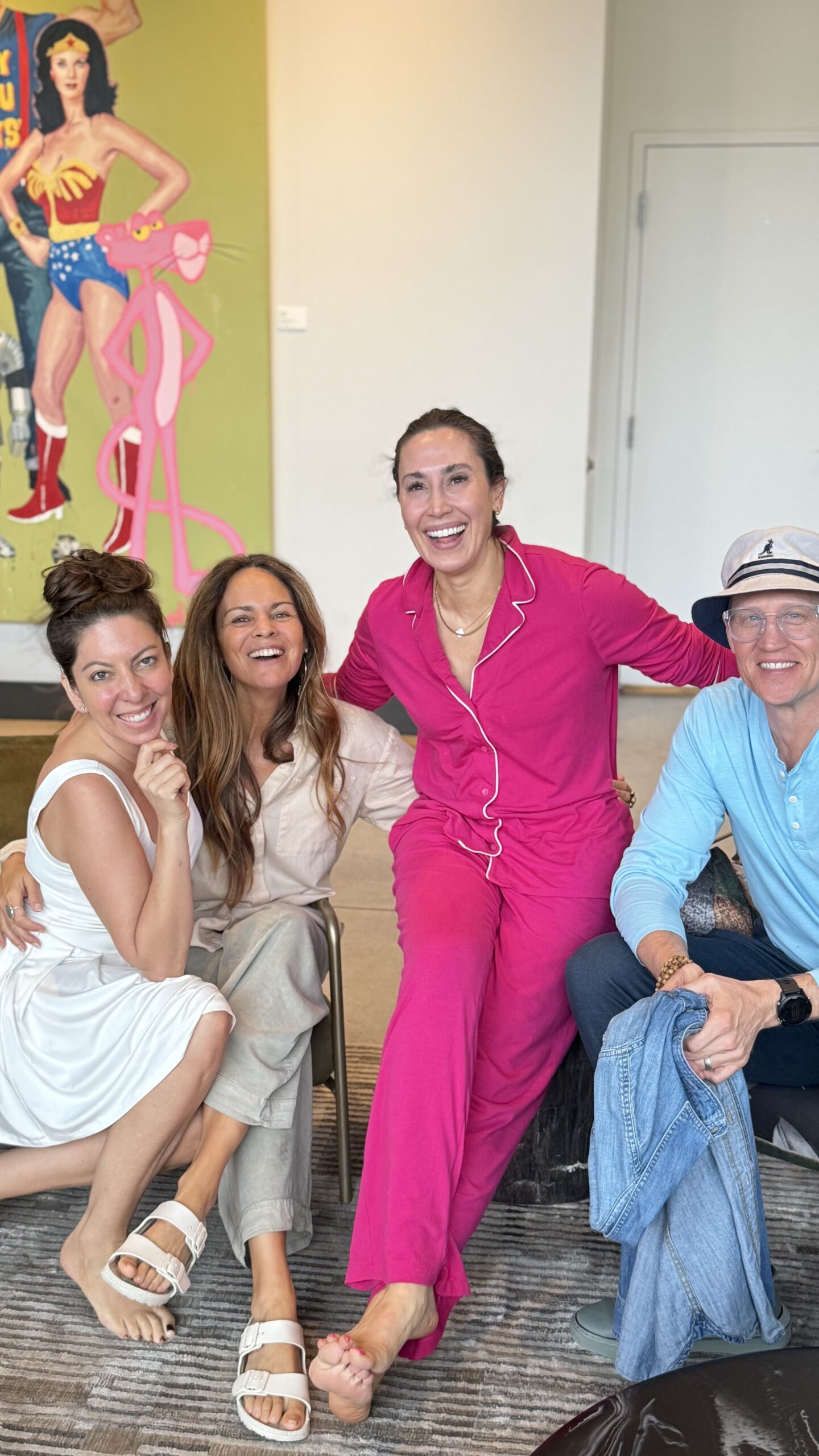
(And Yes, It’s Normal If It Feels Awkward)
Friend… if you’ve found yourself thinking, “Why does it feel harder to make real friends now?”
You’re not alone. And you’re definitely not “too much.”
You’re not behind.
You didn’t screw up.
You’re simply in midlife—where life gets full… and connection can quietly get thin.
Between careers, family schedules, moving, grief, divorce, caregiving, changing interests, or simply realizing you want different people around you, friendship after 40 often requires something we didn’t need as much in our 20s:
Intention.
And here’s the part that matters most: loneliness is not just a feeling—it’s a public health issue.
The U.S. Surgeon General has identified loneliness and social isolation as a widespread concern, noting that roughly half of U.S. adults report feeling lonely. AARP reports that 4 in 10 adults over 45 experience loneliness—and that number continues to rise.
Add social media to the mix, and we’re more connected than ever… yet many feel deeply disconnected in real life.
So if you’ve been craving deeper friendships, more laughter, more “text me when you get home” energy—please hear this:
That’s not needy.
That’s human.
Connection is a primal need WE ALL HAVE IT. The deeper the connection, the safer our nervous system feels. This isn’t weakness—it’s biology.
Why Friendship Feels Different After 40
In midlife, our world often shifts in three major ways:
- Your calendar fills up (work, kids, aging parents, responsibilities)
- Your identity evolves (what you tolerate, value, and want changes)
- Your social structure dissolves (you’re no longer automatically around new people like in school, early careers, or young parenting seasons)
Here’s what I want you to hear clearly:
Friendship after 40 doesn’t happen by accident.
It happens by design.
And science backs this up.
Decades of research from the Harvard Study of Adult Development show that the quality of our relationships is one of the strongest predictors of long-term health and happiness—often more than genetics.
Translation?
Your friendships aren’t extra.
They’re essential.
Confidence Isn’t Required—It’s Built
If you’re waiting to feel confident before putting yourself out there, you may be waiting a long time.
Here’s the reframe I want you to try:
Confidence isn’t the prerequisite.
It’s the result.
Making friends after 40 is a reps game. Small moments of courage build momentum.
Try one of these identity statements—say it like you mean it:
- “I’m the kind of person who builds community.”
- “I go first. I’m not chasing—I’m choosing.”
- “I don’t need a lot of friends. I need aligned friends.”
- “Awkward doesn’t mean wrong. It means new.”
The Missing Ingredient: Repetition
Most adult friendships aren’t missing chemistry—they’re missing consistency.
You can meet someone amazing once… and still never become friends.
If you say, “Let’s grab coffee or go for a walk,” do both.
Coffee one week. Walk the next.
Yes, you might be the one who reaches out more. That doesn’t mean you’re desperate—it means you’re invested. In every relationship, one person often reaches out more and one responds more. Both roles matter.
How to Rebuild Connection After 40
1. Proximity: Put Yourself Where Your People Are
Choose places based on values, not convenience.
Ideas:
- Fitness classes, walking groups, pickleball leagues
- Volunteer teams (purpose creates connection fast)
- Book clubs, mastermind groups, business groups
- Faith communities, meditation or breathwork circles
- Adult education, language or cooking classes
- Community events, fundraisers, local markets
Pro tip: Choose something that meets weekly or bi-weekly. Friendship loves rhythm.
2. Repetition: Become a Familiar Face
You don’t need to be the loudest or most outgoing person in the room.
You just need to be consistent.
Show up 6–8 times before deciding something isn’t for you.
3. Vulnerability (Lightly): Go One Layer Deeper
This isn’t trauma-dumping. It’s warmth plus truth.
Try:
- “I’m intentionally meeting new people this season—want to grab coffee sometime?”
- “I’ve really missed having community. Have you ever felt that?”
- “You seem like someone I could genuinely be friends with.”
So many people are silently hoping someone else goes first.
Start With Micro-Invitations
This is one of the easiest friendship hacks I know.
Instead of big plans, try:
- “I’m grabbing tea after this—want to join?”
- “I’m going to that event next week—come with me.”
- “Want to walk for 20 minutes Saturday morning?”
- “I’m trying a new class—want to be my buddy?”
Low pressure. Repeatable. Human.

The 2-Text Rule
If you meet someone you like:
- Text within 24–48 hours
- Follow up once more if they don’t respond
- Then release it, without making it mean something about you
Recreate a “Third Place”
A third place is somewhere you go that isn’t home or work—where people recognize you.
Examples:
- The same coffee shop every Friday
- A weekly workout class
- A monthly community gathering
Belonging is built in ordinary places, not just big moments.
Loneliness Isn’t Just Emotional—It’s Physical
When we feel disconnected, our nervous system can interpret it as a lack of safety.
The Surgeon General’s advisory links loneliness with significant mental and physical health impacts. On the flip side, movement and routine social exposure can rapidly improve mood, confidence, and resilience.
The CDC recommends 150 minutes of moderate activity per week, and research consistently links movement with reduced depression and improved emotional regulation.
If you want a more confident, social version of you—support your body first.
Mood + Health Habits That Make You More Socially Magnetic
Because friendship isn’t just about finding people—it’s about having the capacity to connect.
1. Walk before you talk
A 10-minute walk before social plans calms stress hormones.
2. Eat like your mood matters
- Protein at breakfast
- Hydrate early
- Minimize crash foods before social events
3. Regulate your nervous system in 60 seconds
Inhale 4 seconds
Exhale 6–8 seconds
Repeat 5 times
4. Sleep = social energy
Protect your bedtime like it’s a wellness appointment.
5. One brave thing per week
One invite. One event. One conversation.
Consistency beats intensity.
If You’re Afraid of Rejection…
Let’s be honest—your brain is trying to protect you.
But here’s the truth:
- Someone being busy isn’t rejection
- A missed text isn’t a verdict on your worth
- Not clicking with a group doesn’t mean you don’t belong
It just means: keep going.
You’re not here to convince people.
You’re here to find your people.
Your 7-Day “Make a Friend” Challenge
- Day 1: Send one “thinking of you” text
- Day 2: Visit a familiar place at a new time
- Day 3: Compliment a stranger and hold eye contact
- Day 4: Invite someone to something simple
- Day 5: Stay 10 minutes longer at a group event
- Day 6: Say one real sentence: “I’ve been craving more community”
- Day 7: Write 5 qualities you want—and 5 you’re done tolerating
Friendship after 40 isn’t about collecting people.
It’s about creating a life where you feel seen, supported, and safe being fully yourself.
If you’re rebuilding… redefining… calling in deeper connection—please hear this:
You are not alone in feeling alone.
And the moment you take small, brave steps toward community—your life begins to shift.
Let this be your permission slip:
Reach out. Join something. Go first.
Your people are looking for you too.
With Love, Dr. Anna Marie


Comments +